Biomanufacturing: Market Overview and Key Dynamics
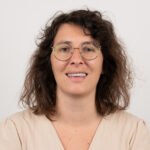
Anabelle PERRIER
Market Research Manager
MabDesign, France
09h20
Opening Keynote Lecture
- E-Lounge Auditorium
Chaired by Alain Rachon
10h00
Beyond data-driven: Rethinking process control as the blueprint for data-driving paradigm
Guillaume JEANNE
Bioprocess Mechanistic Modeling & Advanced Process Control
Sanofi, France
10h00
International Panel - Understanding the Saudi Biopharma Ecosystem: Opportunities and Realities
- E-Lounge Auditorium
Chairman
10h00
Overview of KSA Pharma & Biopharma Landscape
Eng. Khalid AL-ANAZI
Senior Manager Pharmaceuticals & Biotech
Ministry of Industry and Mineral Resources, KSA
10h15
Panel discussion
Eng. Khalid AL-ANAZI
Senior Manager Pharmaceuticals & Biotech
Ministry of Industry and Mineral Resources, KSA
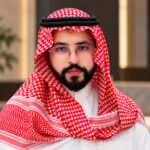
Mohammed JOBRAN
Regulatory Affairs Consultant & Founder
PharmaKnowl Consulting, KSA
Ahmed Saeed MOUSA
General Manager
Lafana Life Science, KSA
Turki ALJALAJEL
Executive Director of External Affairs & Corporate Communications
Lifera, KSA
Hager BEN NASR
Regional Trade Development Advisor
Business France Middle East
10h30
Moderation
Ann GIDNER
Partner / Leader of the International Life Sciences Practice
AXCEL Partners, France
11h10
Workshops
Chairman
12h10
Lunch Break at the Exhibition Hall - B2B Meetings
13h30
Innovations in Analytical Methods Supporting Biotherapeutic Development
- E-Lounge Auditorium
Chaired by Alain Beck & Olivier Cochet
13h30
Analytical and Functional Characterization of Next-Generation Therapeutics: ADCs, CAR T Cells, rAAVs, mRNA and VLPs
Alain BECK
Senior Director Biologics CMC and Developability
Pierre Fabre Laboratories, France
14h00
Characterizing ADCs and Complex Biologics: New Insights
Dan Bach KRISTENSEN
Scientific Director
Servier Symphogen, Denmark
14h25
Scaling Analytical Automation: A Strategic Approach to Accelerate Vaccine Development
Lilian RIPOLL
Laboratory Automation Specialist
Sanofi, France
14h45
Supporting your bulk release with Next Generation Sequencing
Antoine MILLET
Viral Safety and Regulatory Affairs Specialist
Pathoquest, A Charles River Company, France
14h55
Enhancing Reliability, Usability and Environmental Robustness of At-Line Amino Acid Analysis for Upstream Bioprocessing
Jeremie BARBAU
Senior Field Application Scientist
Repligen, France
15h05
A new MAM workflow: how to implement HRMS for fast and reliable mAbs analysis
Charlotte LEKIEFFRE
Application Engineer - BioPharma
Agilent, France
Next-Generation Biotherapies: Bridging Innovation, Manufacturability and Developability
- H-Experience Auditorium
Chaired by Arnaud Delobel & Lise Besnard
13h30
Developability Across Antibody Modalities
Anne-Laure LAINE
Director Preclinical Development
Ridgeline Discovery, Switzerland
13h30
Advancing Bispecific and Multispecific Antibodies
Cyrille DREYFUS
Associate Director & Head of Protein Sciences
Ichnos Sciences, France
13h50
Automated Upstream Monitoring for Enhanced Bioprocess Performance
Charles HEBERT
CEO & Executive Board Member
GenSensor, France
14h10
From Vertical to Orchestrated Integration: The Power of an Ecosystem, Delivering Success for Biosimilars
Joe CODAMO
VP Europe & MENA
Chime Biologics, Switzerland
Anjan SELZ
CEO
Polpharma Biologics International AG, Switzerland
14h30
Upstream and Downstream Processes Intensification as a Lever for Innovative and Competitive Antibody Manufacturing
Ronan McCARTHY
Senior Purification Scientist
LFB Biomanufacturing, France
10h00
David BALBUENA
Director of Business Development
LFB Biomanufacturing, France
14h50
From Peptides to Complex Proteins: New Possibilities in Chemical Protein Synthesis
Gaël GESBERT
Business Development and Innovation Director
CliniScience, France
15h00
Optimizing Upstream Bioprocess Efficiency with GlucoSense- From Offline Sampling to Real-time Glucose Optical Control
Giovanni CAMPOLONGO
Senior Market Segment Manager Bioprocessing
Hamilton, Switzerland
15h10
Cost reduction and performance boost in bioprocess development and scale-up based on hybrid models
Riccardo DE LUCA
Senior Process Modelling Engineer
DataHow, Switzerland
15h20
Coffee Break at the Exhibition Hall - B2B Meetings
16h00
Breakthrough Innovations in Bioprocessing - Part I
- E-Lounge Auditorium
Chaired by Roland Béliard & Fabien Rousset
16h00
Oral delivery of human monoclonal antibodies produced in the milk of goats
Kaio TAVARES
Director of Research & External Innovation
Bio-Sourcing, Belgium
16h10
Towards GMP-Compatible Biofabrication and MRI-Based Quality Monitoring of Implantable Adipose Tissue Constructs
Christophe MARQUETTE
Research Director
3d.FAB – University Claude Bernard Lyon 1, France
16h20
Serum-free bioproduction of an oncolytic protozoan for immunotherapy
Cyril POUPET
Associate professor
University of Tours, France
16h30
Advancing biomolecule purification with Free-Flow Electrophoresis
Kevin FRANIATTE
In Silico Studies Manager & Scientific Director
Askleia, France
16h40
Adjusting CO2 levels to control and monitor glycosylation product quality
Christian MÜLLER
Senior Project Manager / Principal Scientist
Bioneer, Denmark
Formulation & Stability challenges During Clinical Development
- H-Experience Auditorium
Chaired by Alexandre Fontayne & Alain Rachon
10h00
In-Use Stability of Antibody-Drug Conjugates
Sandrine FLEURY-SOUVERAIN
Quality Control Laboratory Manager
Hôpitaux universitaires de Genève, Switzerland
16h00
Designing and implementing a useful quality management system for startups or research providers in the healthcare industries
Sophie MICHEL
Consultant
Sophie Michel Consulting, France
Marc DUBOURDEAU
Chairman
AMBIOTIS, France
16h30
Economic impact of drug stability in hospitals: the case of immunoconjugates
Emmanuel DOUEZ
Pharm. D. - PhD
Hospital Center and University of Tours, France
16h50
Investigating and Resolving Visible Particle Issues in Biologics Manufacturing: A Case Study
Damjan RAJAPAKSE
Senior Manager Physical-Chemistry CMC Development
Fresenius Kabi, Switzerland
17h15
Keynote Lecture
- E-Lounge Auditorium
Chairman
10h00
Beyond the Pitch: Business, Management & Performance
Thibaut CHATELARD
Senior Vice President Revenues and Marketing
Executive Committee Member, Olympique Lyonnais
18h00
Biotuesdays
- E-Lounge Auditorium
Chairman
The BioTuesday is a flagship life sciences and healthcare networking event organized by the Lyon Metropolitan Area. This special session will showcase the expertise and innovations of leading academic, clinical and industrial organizations from the Auvergne-Rhône-Alpes region, fostering exchanges and collaboration opportunities with an international audience.
10h00
Titre de la présentation
10h00
Title
Emma PETIOT
Director 3D Innovation Lab
University Lyon 1, France
10h00
Title
Magali BARBAROUX
Corporate Research Fellow
Sartorius, France
10h00
Title
Hugo TRAVARD
Innovation Manager
MGA Technologies, France
10h00
Title
Michel PROVENCE
President, Managing Director
Jubilant Biosys, France
10h00
Event Flash Update: BIO-Europe Spring 2027 – Eurexpo Lyon
19h00
Poster Session at the Exhibition Hall - Wine & Cheese
21h00
End of Day 1
Workshop Organizer
About us
PharmaKnowl is a Saudi-based regulatory consulting firm licensed by SFDA, helping global pharmaceutical, biotech, and medical device companies navigate the Saudi Arabian market. We provide end-to-end regulatory affairs, clinical trial support, pharmacovigilance, and quality management services fully aligned with SFDA and GCC regulations and delivered by a local expert team based in Riyadh.
Founded in 2014, PharmaKnowl was established to address a critical gap in Saudi Arabia’s regulatory landscape. We offer international life sciences companies a trusted, locally embedded partner for SFDA registration, compliance, and market access.
From our origins as a regulatory advisory firm, we’ve grown into a comprehensive service provider supporting the full product lifecycle; from initial SFDA submissions through post-market surveillance. Our team combines deep local regulatory expertise with global industry understanding, bridging the expectations of multinational companies and the evolving standards of Saudi Arabia’s healthcare regulatory environment.
Design and development of chemically defined media supplemented with vegetable protein hydrolysates to enhance CHO cell growth and monoclonal antibody production
Abstract
In the realm of biopharmaceutical production, Chinese Hamster Ovary (CHO) cells have emerged as the main expression system for recombinant therapeutic proteins (RTPs), despite the availability of several alternative cell lines. CHO cells are among the most widely used worldwide for their unique advantages, e.g, the variety of post-translational modifications that closely mimic those found on human cells (Stach et al. 2019); their high degree of biosafety due to their low risk of propagation of human viruses infection (Lalonde and Durocher, 2017); their adaptability from adherent to suspension cell culture in serum-free media (Davami et al. 2014). Thanks to these combined attributes that solidified the position of CHO cells, they have become the gold-standard of the bioindustry and are responsible for the production of approximately 70% of all marketed RTPs (Pereira et al., 2018; Stolfa et al., 2018; Dziomba et al. 2023).
Fetal bovine serum (FBS) is commonly used as a supplement to basal media for in vitro cell cultures (including mammalian, animal, insect, and bacterial cells). Many studies have revealed its rich composition, containing essential macro- and micronutrients such as growth factors, adherent factors, amino acids, hormones, and vitamins (Michael Butler et al. 2020), which are crucial for proper cell function. In addition to the ethical issue, increasing demand, high cost, significant contamination risks (bacterial and viral), and batch-to-batch variability of FBS prompt us to seek alternatives. To reduce or eliminate FBS use, we have decided to implement culture media with various plant protein hydrolysates. Although serum-free media have been available for several decades, and their widespread adoption has increased, despite the fact that their compositions are undefined for users. Our goal is to make these serum-free media more accessible considering that serum-free media cost about 1.5 to 3 times more than serum-containing media.
Several publications highlighted the effects of vegetable proteins hydrolysate (peptones) as supplements in basal media, i.e : the enhancing of the cell growth and productivity of recombinant proteins (Burteau et al. 2003; Michael J. Betenbaugh et al. 2020). Some publications have shown an enhancing of the volumetric productivity more than 100%, and a 40% increase in cell number (Davami et al. 2014; Davami et al. 2015). Then, the composition of these plant hydrolysates varies according to the plant source and the production process. Thanks to their vegetable origins there are neither ethical issues, nor health standards.
In the present study, the effect of different peptone concentrations on the CHO-K1 cell line under various culture conditions (adherent/suspension) in a basal medium with a 10-fold reduction of FBS have been evaluated. Supplementation with wheat peptones at defined concentrations increased the viable cell density of CHO-K1 in adherent conditions by 190 – 265%.
Additionally, the suspension culture exhibited different results compared to the adherent conditions. In suspension cell culture, only three peptones – wheat, soy, and pea – enhanced viable cell density compared to the medium without hydrolysates. Actually, the only peptone supplementation is not enough to be completely serum-free, but that can reduce the FBS consumption.
Biography
Fabien Compeau is a researcher at both Organotechnie and Université Sorbonne Paris Nord, within the Tissue Engineering Research Unit. With a solid foundation in molecular and cellular biology. His current work centers on developing serum-free media. He completed three years of study at CY Cergy Paris Université and two years at Université Paris Cité. His internships provided valuable experience at the Institut de Recherche Criminelle de la Gendarmerie Nationale, the Institut Jacques Monod, and the Institut Pasteur, his research focused on cell signaling, dynamics, and differentiation.
Igor Chourpa
Molecular optical spectroscopy as a PAT tool in USP bioprocessing
Abstract
Process analytical technology (PAT) aims at real-time, sampling-free monitoring of bioprocesses, for instance at the upstream stage (USP), when suspensions of CHO (chinese hamster ovary) cells grow in bioreactors and produce monoclonal antibodies (mAbs). The advantages of in-line PAT over the off-line approaches are numerous, from scientific, economic and ecological points of view. Using light as a non-invasive PAT tool is one of the promising ideas that give rise to various technological solutions. Nevertheless, the implementation of novel PAT approaches is limited and still requires further progress in analytical instrumentation and its integration in the whole process. In this talk, we plan to present a short overview of advances in implementation of molecular optical spectroscopy as a PAT tool in upstream processing of therapeutic antibodies we obtained in the framework of our interdisciplinary research project CLIMB’IN. The project uses analytical spectroscopy based on light absorption and/or multi-angle scattering, both elastic (Rayleigh) and inelastic (Raman) for quantitative monitoring of multiple critical process parameters (CPPs). The advances reached by the CLIMB’IN consortium involve instrumental design and experimental protocols, with a particular focus made on machine learning algorithms. Brought together, these advances allow to improve the relevance and the robustness of the corresponding PAT approaches required for their industrial implementation.
Anne-Sophie GARY
Innovative tools to monitor biological variability of bioprocesses
Abstract
Today, virus-based products like oncolytic viruses and gene therapies are part of the most promising biotherapies. The development of biomanufacturing processes for viral products is not a straight road. It is generally associated with process complexity and biological variability. In depth expression system characterization by adding biological data to standard chemical data will help to understand bioprocesses. With a close collaboration between Naobios and Gensensor, case study from Vero cell substrate-based process will illustrate how transcriptomic data may help to understand and monitor biological variability linked to bioprocesses.
Biography
Anne-Sophie has a PhD in cell biology and is engineer in biotechnology. After working on cell stress and death pathways, Anne-Sophie specialized in the development of advanced therapy medicinal product. Now Principal Scientist at GenSensor, she is in charge of identifying biomarker panels on different expression systems and leads, with her team, the company’s internal research projects and scientific collaborations.